
Home > Events > The Sea: The New Arena for Hybrid Threats
The Sea: The New Arena for Hybrid Threats
18.10.2026
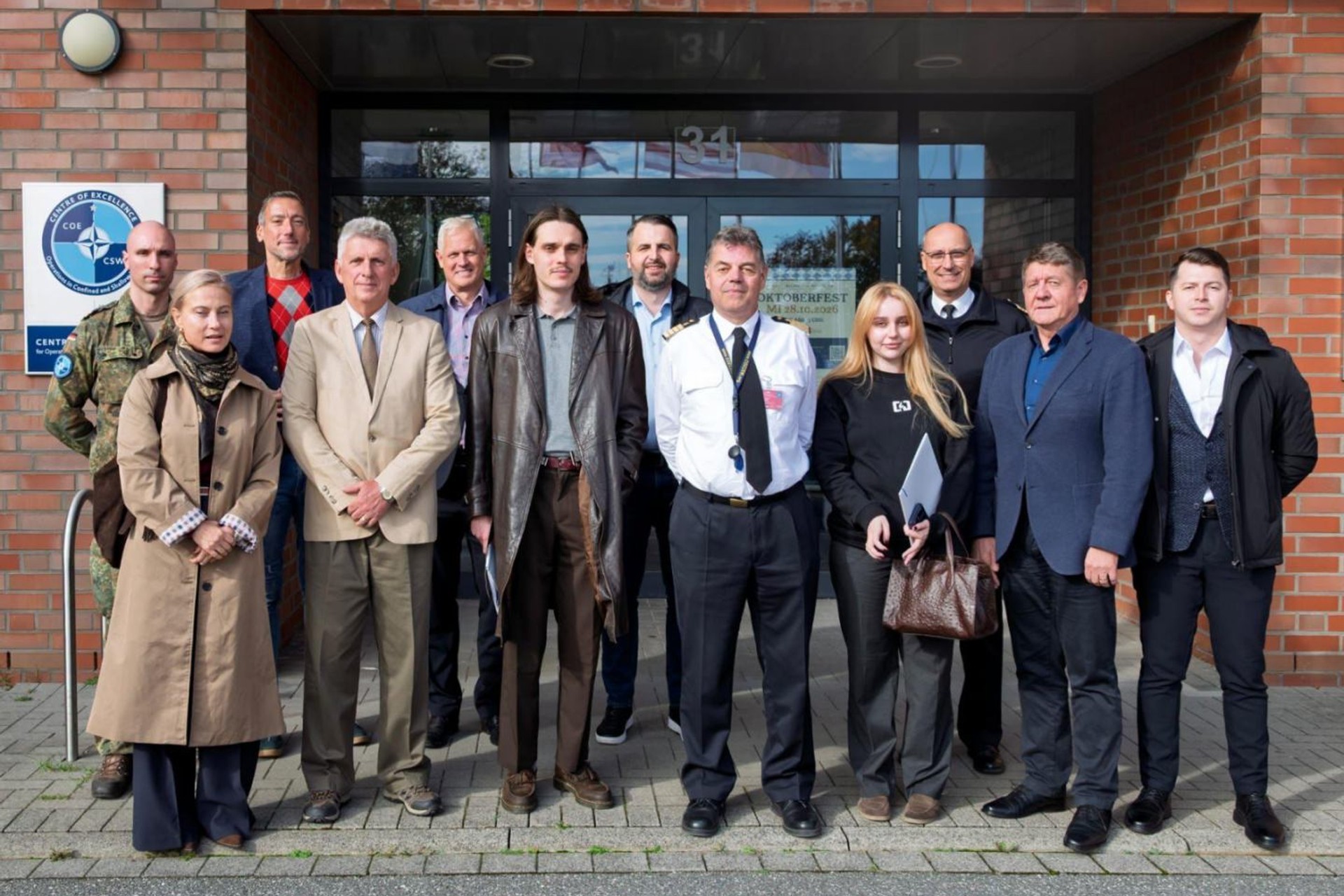
The Sofia Security Forum is part of an international research consortium focused on the protection of critical infrastructure, funded by NATO’s Science for Peace and Security (SPS) Programme.
As part of the project, an international team of security experts, including Dr. Ivo Tsekov, Senior Analyst at the Sofia Security Forum, visited NATO’s Centre of Excellence for Operations in Confined and Shallow Waters (COE CSW), located in the German city of Kiel on the Baltic Sea. The Centre is a NATO-accredited international military organization that supports the Alliance’s transformation and maritime readiness in coastal and confined waters. This geographical scope includes two of the most dynamic regions on NATO’s northern and eastern flanks: the Baltic Sea and the Black Sea.
The host of the meeting and Director of the Centre, Captain Christoph Mecke, highlighted the growing importance of Europe’s peripheral "small" seas, where competing geopolitical interests intersect. According to him, an increasing number of malicious activities are taking place within the Exclusive Economic Zones (EEZs) of NATO member states, representing one of the manifestations of a new generation of hybrid threats at sea.
Captain Mecke emphasized the need to collect the broadest possible range of intelligence and information, from the seabed to satellites in low Earth orbit, to enable states to protect their coastlines effectively and accurately identify the origins of threats. This is particularly important given the challenge of attribution — tracing an attack back to its original source and perpetrator amid uncertainty and operations conducted in the grey zone between war and peace.
The Centre actively employs advanced technologies, including artificial intelligence and simulation-based wargaming software, to recreate potential scenarios of hostile attacks. The concepts and findings developed through these exercises serve as valuable tools for military doctrine developers. Ultimately, doctrine determines how the Alliance’s armed forces operate and employ maritime power and naval assets.
"If a strategy does not work in a simulation, it is highly likely that it will not work in a real-world situation either," Captain Mecke stated, emphasizing the importance of simulation exercises.
"Losing a wargame is actually a learning experience. The word 'failure' is not accurate because such an outcome demonstrates that a particular course of action is not a good idea and that a different approach should be explored next time."
At the conclusion of the meeting, Captain Mecke extended an invitation to the Republic of Bulgaria to join the Centre’s activities.
During the same working visit, the team of experts also travelled to Bremerhaven on the North Sea, where they visited the German Aerospace Center (DLR), Germany’s national research centre for aeronautics and space. There, they were introduced to the institute’s latest technological developments, presented by Dr. Lucia Hofer, a specialist in hybrid threats and cyber infrastructure.
Particular emphasis was placed on counter-drone systems, as drones have overtaken naval mines as the primary threat to maritime infrastructure, military equipment, and human life at sea.
Dr. Hofer explained that highly effective counter-drone systems already exist and are capable of disabling unmanned aerial vehicles. However, a major challenge remains: minimizing the risk of falling debris damaging buildings and facilities or injuring people after a drone has been neutralized.
To address this challenge, the Centre is actively developing electronic warfare techniques designed to disrupt drones in flight or redirect them, rather than destroying them with kinetic weapons.
The role of the private sector was also discussed, given that the majority of critical maritime infrastructure is privately owned. However, many companies remain reluctant to cooperate with government authorities, fearing that such cooperation could make them targets of hostile attacks.